

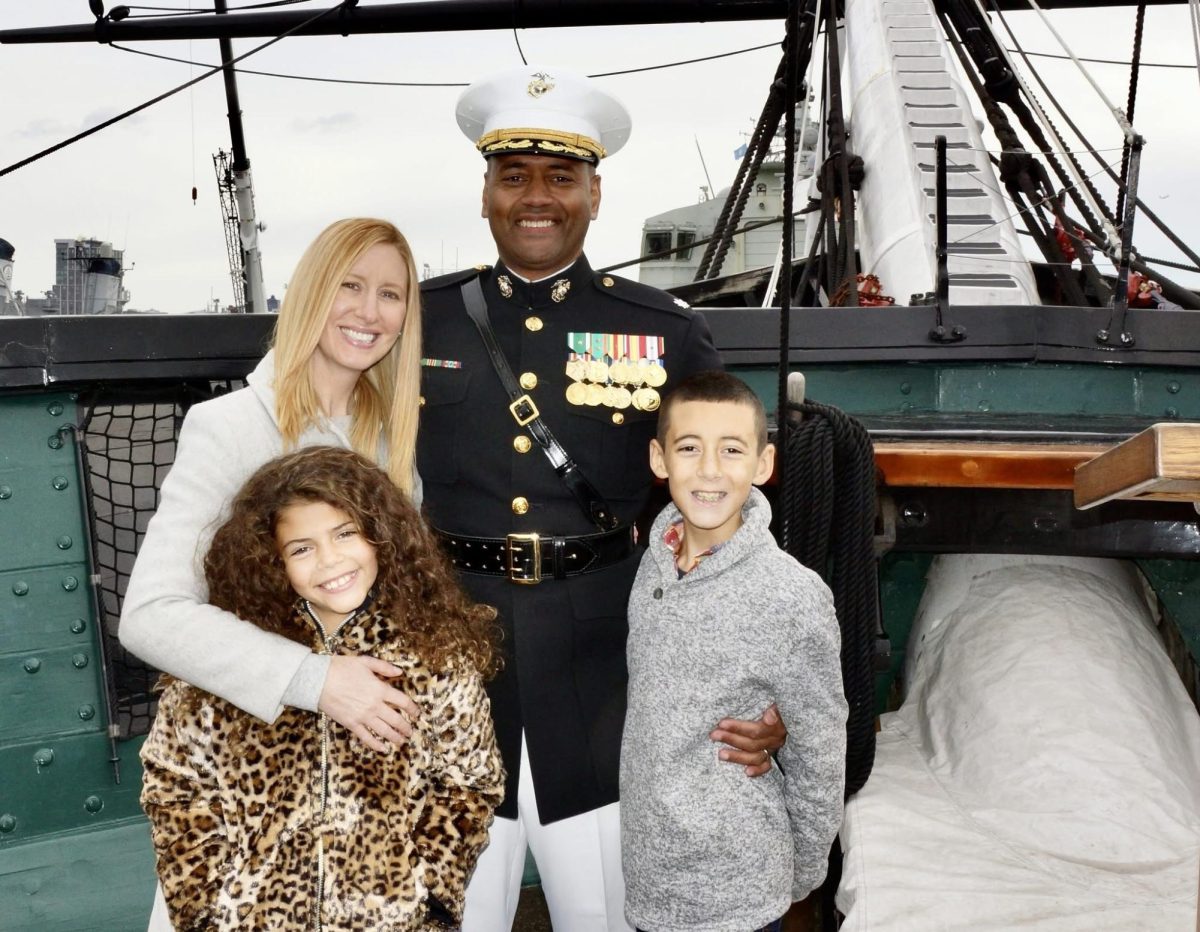
At Portsmouth High School, the effects of military service extend far beyond uniforms and rank. They show up in classrooms, hallways, group projects, and daily routines through students whose parents serve and have served. For these students, growing up in a military family often shapes their view of life.
Though their experiences vary, many share a common reality: balancing the routines of high school with the unique challenges of being a military child.
According to the article “Revolving Doors: The Impact of Multiple School Transitions on Military Children” by S. Beth Ruff and Michael A. Keim, there are approximately 1.2 million school-age children with one or both parents serving active duty in the U.S. military, and about 90% attend public school. Furthermore, military children move three times more on average than civilian students.
Frequent moves, long absences, and changing family dynamics can be a regular part of life as a military kid. At PHS, sophomore Madison “Maddie” Whitaker and senior Ash Markley share how these experiences have shaped their lives both on and off school grounds.
Whitaker’s father, Dale Whitaker, served in the U.S.Coast Guard for 20 years and retired as a Petty Officer First Class (E-6).
Originally stationed in California, Whitaker and her family moved to Portsmouth when she was just 8 years old. Whitaker described that, during much of her childhood, her father was deployed.
“He’s always gone, so you’re not as close with them,” Whitaker said. “He’d be gone for months at a time.”
When she was younger, Whitaker said she did not fully grasp the full impact of her father’s work.
“I didn’t fully understand it, I think,” she said. “I thought he was just gone a lot for work. And then as I got older, I realized he was doing good things for our country.”
Her father retired from the U.S. Coast Guard four years ago when Whitaker was 11 and is now in human resources as a manager for Casella, a major regional solid waste, resource, and recycling management company.
Since his retirement, she has noticed the effects of those many years of service on her father more clearly. Whitaker said her father experiences frequent physical challenges related to his service, including partial hearing loss and headaches.
Despite the challenges, Whitaker said her father’s career has shaped how she views helping others. Hearing about his work, especially the rescue and emergency response efforts, has profoundly influenced her perspective on service.
“Since my dad was in the military, I feel like I have the urge to help people,” Whitaker said.
For Markley, growing up in a family with military connections meant higher expectations and an earlier focus on discipline. Markley’s father served in the U.S. Marine Corps, while her half-sister’s dad served in the Army. Both enlisted shortly after graduating high school and have since retired.
Markley said military values shaped her childhood from an early age.
“There was always a higher expectation for us,” Markley said.
Unlike many military families who relocate frequently, Markley has remained in the Seacoast region throughout her childhood. Her family’s connection to the area began when her grandfather, who was in the U.S. Coast Guard, was stationed in Kittery. “That’s why we originally moved here,” she said.
Even without frequent moves, Markley’s life at home is continually shaped by military culture.
“I realized soon that I liked that structure,” Markley said. “I like having plans and an itinerary.”
When asked what one of her largest takeaways she’s learned while surrounded by military culture, she said: “Respect people no matter where they come from. And don’t sacrifice your peace to make others happy.”
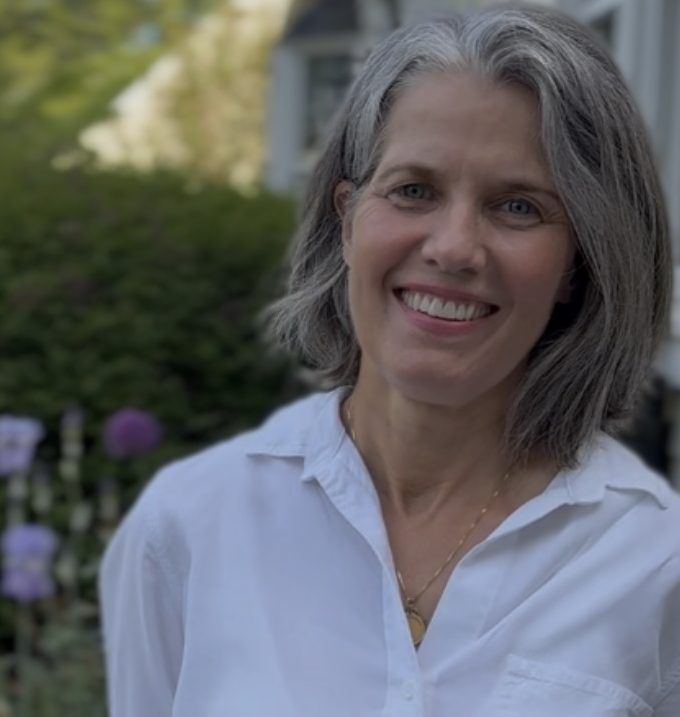
PHS English teacher, Laura LaVallee, has connections to the military through her spouse, Matt Hobert, a Lieutenant Colonel in the U.S. Marine Corps who has been serving for 23 years. Hobert is on active duty and is currently stationed at the Pentagon.
LaVallee says that years of long absences when her husband was deployed have undoubtedly shaped how she views not only teaching, but life. While teaching in Japan, LaVallee said many of her students had one or both parents deployed for long periods of time. Through this, LaVallee became more aware of how military life affects kids emotionally and academically.
Now, back at Portsmouth, she is more sympathetic to students whose parents are not always present, whether because of the military or for other reasons.
As a spouse of an active member in the military, LaVallee said people often dismiss the difficulties military spouses face by saying, “You knew what you were getting yourself into.”
In reality, having a spouse in the military often means having to parent all on your own, not an easy task, expressed LaVallee, with two kids herself.
With her daughter, Akira, in 6th grade, and her son, Jackson, in 8th grade, both at Portsmouth Middle School, she said it can be hard when her husband is missing so many important milestones such as concerts, birthdays, first days of school, and more.
At the same time, LaVallee remarks that being a part of a military family is wildly rewarding. She believes that military life has taught her the importance of service and the value of helping your community.
“I know that I can serve my country without having to be in the military myself,” she said. “Whether it be at soup kitchens or simply helping out the community, small acts are always the best.”
Having a husband in the military also means an overwhelming pride for LaVallee. Most of all, she admires his commitment to serving the country, dedication while in uniform, and the positive influence he has had on younger Marines.
At PHS, the impact of loved ones in military service is not always visible, but its influence is still present in every student whose families have served. Whether in long absences, lessons on discipline, or a stranger’s understanding of sacrifice, military life continues to shape all those affected by it in more ways than one. For Whitaker, Markley, and LaVallee, these experiences have shifted their perspective on the world and taught them lessons that will follow them both inside and outside the classroom.





![Piscataqua River Bridge [I-95] taken, March 24, 2026, in South Eliot, Maine.](https://phspaperclip.net/wp-content/uploads/2026/04/A5094948-30A6-485A-AF79-7DE27D521913_1_105_c.jpeg)