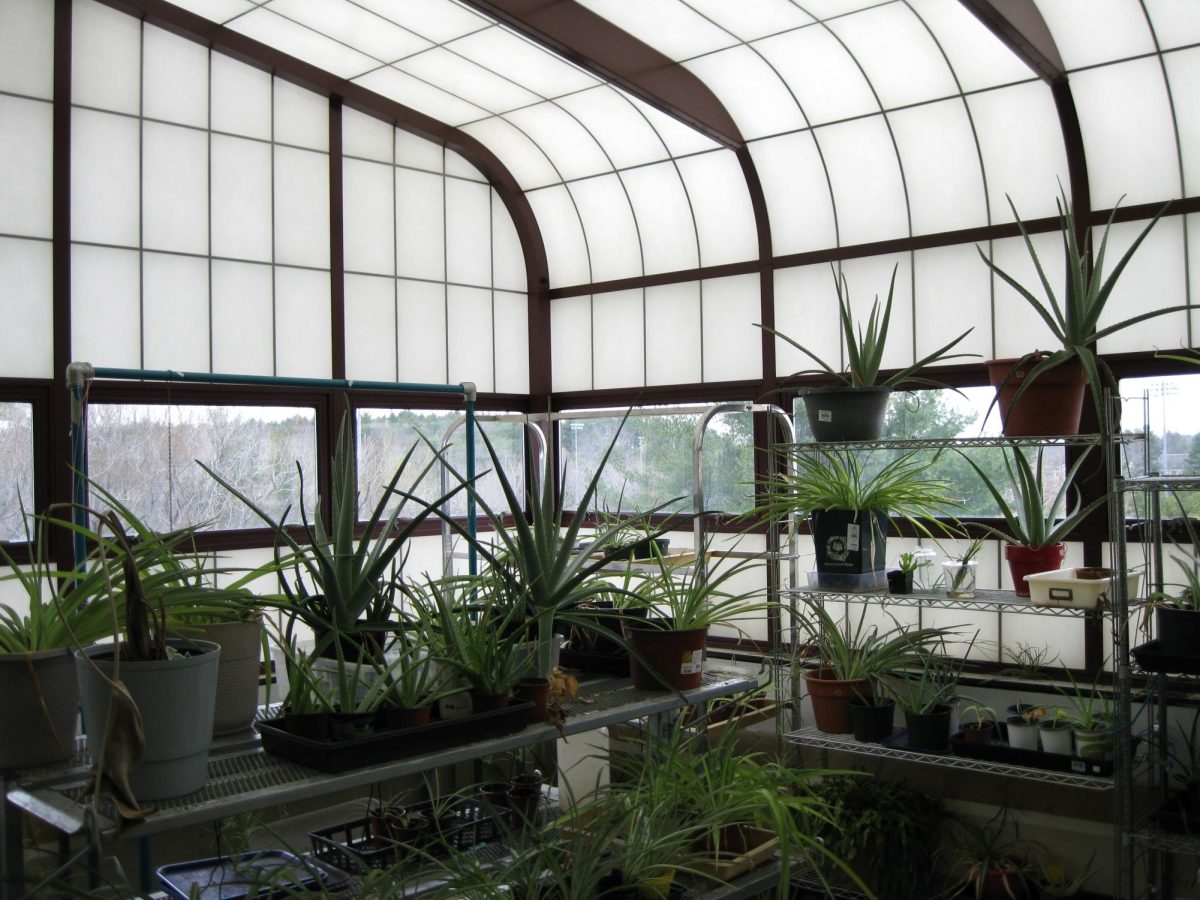
Green succulents reach for the windowed ceiling, which lets in dancing rays of sun into the warm room. It’s hard to believe that such a place can be found at Portsmouth High School.
Tucked in the far corner of the third floor, the greenhouse hides. A room that is not quite like any other in the building, and one where all of its full-time inhabitants are terraces of plant life.
While it’s often sitting at ~100༠ to keep the climate humid for its residents, some might wonder: what we using such a space for? Why is it important to have a greenhouse? What is the future of our greenhouse?
While the greenhouse might feel like you are walking into a garden center, it’s also a classroom used primarily by Grow it Green, a science class that specializes in the interaction of plants and people, as well as environmental sustainability practices. It also allows students extended time in the greenhouse to both improve and care for the environment.
“[The Course] allows students to make a garden thrive and not just survive,” said Heather Wheeler, a science teacher who is a caretaker of the greenhouse as well as the instructor for Grow it Green and several other environmental-based science courses.
While Grow it Green may be the class that specializes in the greenhouse, it is most certainly not the only one.
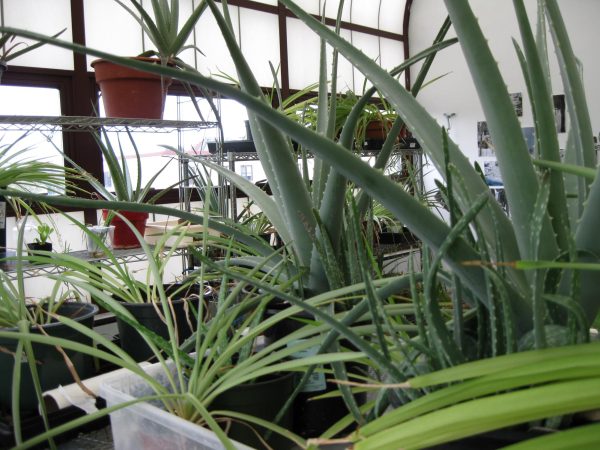
DE Environmental Science and, on occasion, biology classes also take advantage of the greenhouse.
Through Wheeler, students are also able to participate in a year-long independent study program, from which they receive class credits, and can utilize the greenhouse space.
Students design a prompt or goal that they wish to answer or achieve with the greenhouse, and spend the school year attempting to answer their questions.
This program gives students a window into the world of sustainability, where they are not just limited to working in the already spectacular greenhouse, but also have the opportunity to get involved with the school garden and beehive, as well as chances in off-site work in sustainable agriculture.
“It educates people on plants in general, and plants are so crucial to our environment; it’s not hard to make a difference [to the environment],” said Hannah Williams, a PHS sophomore.
The greenhouse may be a force of nature, both literally and figuratively, but what is its future?
While the succulents may be pretty, to no surprise, we can’t eat them, and while the greenhouses’ intended uses include many facets, producing edible food is one of its intended goals.
“I would like to see [the greenhouse] become its most efficient food-producing self,” said Wheeler.
The food currently grown in the garden, and ideally in the greenhouse, will go to New Hampshire food pantries like Gather.
If you are interested in getting involved with the Portsmouth High School Greenhouse and Garden, talk to your guidance counselor about taking Grow it Green or Environmental Science.