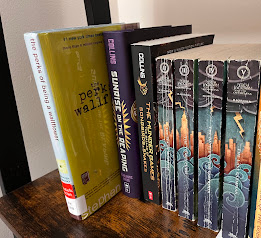
“The Perks of Being a Wallflower” by Stephen Chbosky captures the feeling of being both deeply aware and completely invisible. Despite being published in 1999 and set in the early 1990s, the book is still relevant, especially for teenagers navigating isolation and connection.
The story follows Charlie, a freshman in high school. He is coping with the loss of his best friend, who was also one of his only friends. He goes into high school feeling completely alone and invisible.
When he meets Sam and Patrick, two seniors who take him under their wing, he feels like he truly belongs. Charlie navigates through the highs and lows of adolescence; however, the book is less about the events in his life and more about how he experiences them.
Charlie’s isolation is closely tied to his trauma. Charlie starts the book off in a rough spot, after just losing his closest friend to suicide. Even before that, he suffered from depression and guilt surrounding his Aunt Helen’s death.
When we find out that his Aunt Helen sexually abused him growing up, we see Charlie have a mental breakdown. During these scenes, Charlie’s actions can be recognized as PTSD.
“The Perks of Being a Wallflower” successfully depicts PTSD and depression. Additionally, many high schoolers today struggle with depression and trauma of some sort. Chbosky does a great job of showing these serious topics in a way that allows a high schooler to relate and understand.
Trauma can present itself in different ways, as shown accurately in the novel. Some ways include exhaustion, trouble concentrating, low self-confidence, running away, self-isolation, and risk-taking.
Charlie shows all of these throughout the book, and reading about Charlie’s experiences allows us to understand these mental disorders through the perspective of someone who is dealing with them. Chbosky does an incredible job incorporating these significant topics in a relatable and clear way.
This is emphasized by the book’s formatting, which presents letters written by Charlie to an unspecified ‘friend’. At first, I found this narration technique disorienting, but I later realized that it adds a sense of intimacy.
It felt like Charlie was directly addressing the reader, making us feel even more connected to him. The letters also allowed us to envision everything from Charlie’s perspective. Charlie is a dynamic character who has a habit of romanticizing things, which makes his outlook captivating for readers.
Charlie is also extremely observant, earning himself the title of a wallflower. When Charlie notices things, he isn’t just seeing actions, but the emotions behind them.
An example is when Charlie notices that when Sam’s boyfriend takes a picture of her, he tends to believe that his photograph is beautiful because of the way he took it, rather than because it was a picture of Sam.
While most people wouldn’t think more of it, Charlie did. He went on to say, “I just think it’s bad when a boy looks at a girl and thinks that the way he sees a girl is better than the girl actually is.”
“The Perks of Being a Wallflower” is filled with honest and raw lines from Charlie that offer a new perspective on life. Chbosky’s writing has been called realistic and blunt, but in a way that feels authentic to a teenager.
Charlie feels a need to be heard, but is isolated in his own life. The letters themselves are proof of this. Charlie picks this ‘friend’ to address simply because he heard they are good at listening. Teenagers today often have the same struggle. We live in a world of constant communication, yet we are more isolated than ever, making Charlie’s experience more relatable.
By the end of the novel, Charlie begins to participate more and no longer isolates himself. He is understood by his friends, his family, his teachers, and most importantly, himself. He no longer feels the need to write a letter to an anonymous ‘friend’ because he has real friends he can talk to without fear of judgment.
“The Perks of Being a Wallflower” is one of the most impactful books I’ve read in high school. It perfectly captures the idea that being noticed and understood is something so beautiful and life-changing. Even after struggling through years of trauma and isolation, connection and self-acceptance are possible. For teenage readers, Charlie’s story is both relatable and hopeful.